
 AUTO
 BIKE
 ATV
 UTV
 SLED
 BOAT
 PWC
 SEMI
European Diesel Applications
European diesel oil selection begins with the manufacturer's specification, not just the number on the front of the bottle. Two oils labeled 5W-30 can serve different requirements, and two vehicles wearing the same badge may need different products. This page groups the European oils in our catalog by formulation family and gives you a practical route to their local detail pages. The displayed products are alternatives to investigate, not a claim that every oil fits every European diesel. Record the exact model year, engine and required oil specification before comparing the cards, especially when a vehicle has a diesel particulate filter or other aftertreatment equipment.
AMSOIL Vehicle & Equipment Lookup
Click Your Vehicle Type
Compare European specification examples
Use the full specification string from the engine documentation, including suffixes. The examples below reproduce selected application identifiers from AMSOIL’s data sheet; they do not establish formal OEM approval or verify fitment to a particular vehicle.
| Product code / details | SAE grade | Selected AMSOIL application listings | Kinematic viscosity at 100°C (cSt) |
|---|---|---|---|
| AEL | 5W-30 | ACEA C3; VW 504.00/507.00; BMW LL-04 | 12.2 |
| AFL | 5W-40 | ACEA C3; VW 505.01; MB 229.51 | 14.4 |
| EOT | 0W-30 | ACEA C2/C3; MB 229.52 | 12.3 |
| AFE | 0W-20 | ACEA C5; BMW LL-17FE+; MB 229.71 | 8.1 |
| EZT | 0W-20 | ACEA C5; VW 508.00/509.00 | 8.2 |
| EFO | 0W-40 | ACEA A3/B4; BMW LL-01; VW 505.00 | 13.7 |
| EFM | 5W-40 | ACEA A3/B4; MB 229.5; VW 505.00 | 14.6 |
Typical values use ASTM D445 and are not guaranteed limits or a performance ranking. Source: AMSOIL European oil data sheet G3395, July 2026. Read its full application list before selecting.
Application status: these comparisons identify possible product choices. They do not confirm fitment for a vehicle, engine or component.
Low-SAPS options: match the complete requirement
AMSOIL uses LS to identify low-SAPS European formulations. SAPS refers to sulfated ash, phosphorus and sulfur, which are relevant to oil formulation and emissions-system compatibility. The low-SAPS products here include 0W-20 and 5W-30 choices, with a separate LS-VW 0W-20 product. Similar naming is not a reason to interchange them. Compare each product's current manufacturer-specification list with the vehicle requirement before moving on to package size.
An owner's manual may specify both an oil grade and a manufacturer standard. Record both. If the vehicle has a service display or flexible interval system, retain its applicable instructions as well. The correct oil does not by itself establish that a particular extended interval is permitted. When older receipts name only a viscosity, use the current documentation to resolve the missing specification rather than assuming the last oil change identified the right product.
Possible application — verify requirements
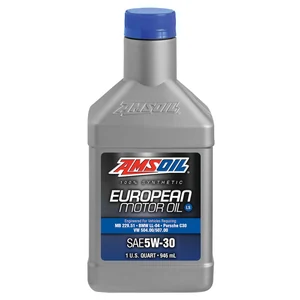
AMSOIL 5W-30 LS 100% Synthetic European Motor Oil
Product Code : AELQT-EA
SEE PRODUCT PRICE
VIEW DETAILSPossible application — verify requirements
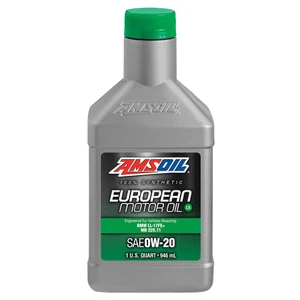
AMSOIL 0W-20 LS 100% Synthetic European Motor Oil
Product Code : AFEQT-EA
SEE PRODUCT PRICE
VIEW DETAILSPossible application — verify requirements
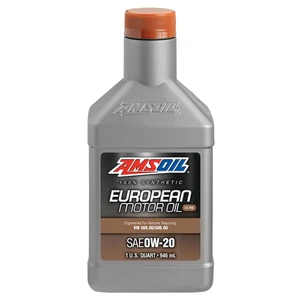
AMSOIL 0W-20 LS-VW 100% Synthetic European Motor Oil
Product Code : EZTQT-EA
SEE PRODUCT PRICE
VIEW DETAILSMid-SAPS options: compare 0W-30 and 5W-40 carefully
MS identifies the mid-SAPS family. The 0W-30 and 5W-40 products shown below differ in viscosity as well as their application information. Their placement in the same group is a browsing aid, not a statement that they are interchangeable. Start by locating the exact standard required by your engine, then review whether the product documentation identifies that application and grade. Do not select a product solely because it is described as European or suitable for diesel engines in general.
This is particularly important in a household with several vehicles. One owner's car may call for a different oil from a relative's van, even when both use the same fuel and visit the same workshop. Keep a vehicle-specific service note containing the engine information and full oil name. If you ask a technician to use a supplied product, confirm the assignment before the service and retain the receipt so the next visit starts with clear records.
Possible application — verify requirements
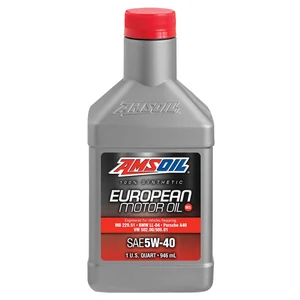
AMSOIL 5W-40 MS 100% Synthetic European Motor Oil
Product Code : AFLQT-EA
SEE PRODUCT PRICE
VIEW DETAILSPossible application — verify requirements
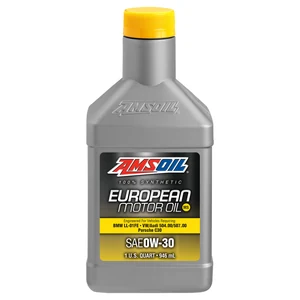
AMSOIL 0W-30 MS 100% Synthetic European Motor Oil
Product Code : EOTQT-EA
SEE PRODUCT PRICE
VIEW DETAILSFull-SAPS products: review the engine and emissions design
FS identifies full-SAPS European formulations. The 0W-40 and 5W-40 products in this collection provide routes to their documented applications, including appropriate older engine requirements. Full-SAPS does not mean universally more protective, and low-SAPS does not mean universally more suitable. Each formulation balances requirements for its intended applications. An engine with aftertreatment must receive an oil that satisfies its own specification, even if another owner prefers a different formulation.
The broader AMSOIL European catalog also contains a 10W-60 product. It is intentionally not presented here as a generic diesel choice. A European product family can include specialized gasoline-engine applications as well as diesel applications. Follow the full application information whenever browsing beyond this page. The same caution applies when comparing a European 5W-40 with a Heavy-Duty diesel 5W-40: a matching viscosity does not establish the same manufacturer requirements.
Possible application — verify requirements
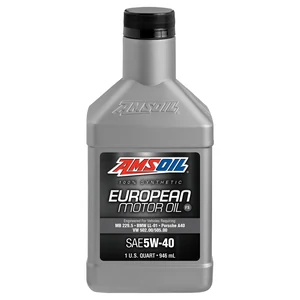
AMSOIL 5W-40 FS 100% Synthetic European Motor Oil
Product Code : EFMQT-EA
SEE PRODUCT PRICE
VIEW DETAILSPossible application — verify requirements
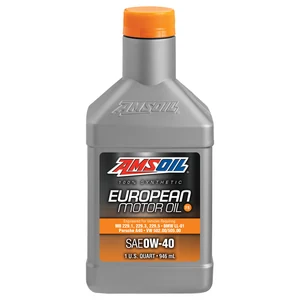
AMSOIL 0W-40 FS 100% Synthetic European Motor Oil
Product Code : EFOQT-EA
SEE PRODUCT PRICE
VIEW DETAILSRead application wording precisely
A manufacturer's formal approval, a performance specification and an oil marketer's recommendation are different kinds of information. Read the wording in the current technical bulletin rather than treating every number in a product description as proof of formal approval. If your maintenance or warranty requirements call for an explicitly approved product, verify that status through the appropriate current documentation. Preserve the complete specification identifier, including any suffix or revision that matters to the application.
Reviews cannot resolve that distinction. Another owner may have a different engine, model year or market version, and a positive experience does not establish compliance for your vehicle. Product data is more useful for the technical check, while reviews can describe packaging, delivery or personal impressions. Our local pages provide a place to review product information and link onward to the official source without making a vehicle-specific fitment claim from the category label alone.
Oil changes, filters and short-trip use
Follow the vehicle's maintenance instructions and the service conditions that apply to your driving. A diesel used for repeated short trips can have a different service pattern from one used mainly for sustained highway travel. If the oil level changes unexpectedly or a warning appears, follow the vehicle guidance and seek diagnosis. Changing to a thicker grade without understanding the cause is not a substitute for investigating a problem.
Select the oil filter by the exact application rather than by the oil brand. Record the full oil name, required specification, filter identification, service date and mileage. Add any relevant technician notes so later decisions are based on the vehicle's history. If you are maintaining a diesel van for business use, keep those records with the unit rather than only in a personal shopping account. They remain useful if a different driver or shop handles the next service.
Turn the specification into a shortlist
A straightforward process is to identify the engine, find the required manufacturer specification, confirm the permitted viscosity and then compare the product documentation. Only after those checks should package quantity and account options enter the decision. This avoids a common shopping detour: choosing a familiar bottle first and trying to justify it afterward.
Use the product cards below their relevant formulation headings to explore local details. For smaller American diesel applications, visit All Diesel Engine Oils instead of assuming that European oils are the correct route. If the manual is unclear, contact Kyle with the exact requirement you are trying to match. A photograph or transcription of that specification is more useful than a general request for oil for a European diesel.
Keep exploring diesel products
Choose products first. Then compare account options.
Explore AMSOIL Preferred Customer membership for personal purchases or the Commercial Account guide for qualifying business use. Compare all account types before deciding.
Technical sources & application information
Educational guidance prepared for Diesel Oil Works. Original source list compiled October 23, 2026; the separately labeled comparison check covers the newer product-family comparison. Product-card rating check dates appear on each card. Confirm current applications and instructions in the official sources.