
 AUTO
 BIKE
 ATV
 UTV
 SLED
 BOAT
 PWC
 SEMI
Shop Diesel Oil by Viscosity
Already know the viscosity your engine requires? This page gathers the diesel oil catalog into grade groups so you can compare the relevant products without searching the entire store. It also includes European application alternatives where a manufacturer specification must guide the final choice. A shared viscosity is a useful filter, not proof that products are interchangeable. Keep the engine's performance requirement alongside the grade while browsing. Each product card opens a local detail page, where you can review the full product identity, package choices and supporting information before making the final application check.
AMSOIL Vehicle & Equipment Lookup
Click Your Vehicle Type
Same grade does not mean the same specification
This page is a grade index. If you have not identified the engine specification, start with the family comparison instead. Record both the permitted SAE grade and the required API, ACEA or manufacturer performance standard before narrowing the cards.
| Requirement | What it describes | What to compare next |
|---|---|---|
| SAE grade | Viscosity classification; it does not identify the entire formulation. | Compare oil families |
| API diesel category | Performance requirements. FA-4 is not interchangeable with CK-4. | Explore Heavy-Duty choices |
| OEM specification | An engine manufacturer’s named requirement; exact suffixes matter. | Compare European specifications |
| Component identity | The engine, transmission and axle are separate applications. | Browse maintenance guidance |
Read the exact oil specification before comparing claims. The oil-family overview and European specification guide provide different starting points; neither verifies a vehicle automatically.
Application status: these comparisons identify possible product choices. They do not confirm fitment for a vehicle, engine or component.
0W-20: specialized applications need precise matching
The 0W-20 group includes a dedicated smaller-diesel product and European alternatives. These products do not serve a universal 0W-20 application. Compare the manufacturer's required specification with the individual bulletin. A vehicle calling for a particular low-viscosity diesel oil should not be assigned another grade simply because a heavier oil sounds more suitable for towing or high mileage. Follow the permitted choices for that engine.
The 0W winter classification relates to low-temperature tests; it is not a declaration that the oil has zero viscosity. Oil still changes viscosity with temperature. The SAE 20 portion describes its operating-temperature grade. Neither number tells you how long an oil can stay in service or which emissions systems it supports. Those questions require the product specifications and the manufacturer's service guidance, not a conclusion drawn from the grade alone.
0W-20
Possible application — verify requirements
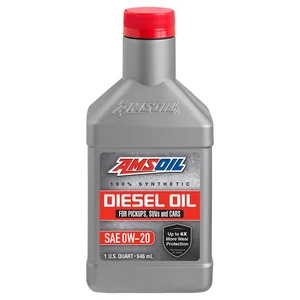
AMSOIL 0W-20 100% Synthetic Diesel Oil
Product Code : DP020QT-EA
SEE PRODUCT PRICE
VIEW DETAILSPossible application — verify requirements
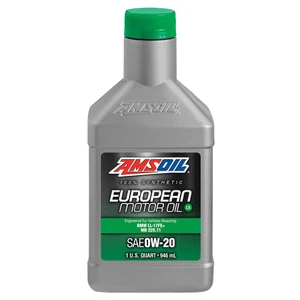
AMSOIL 0W-20 LS 100% Synthetic European Motor Oil
Product Code : AFEQT-EA
SEE PRODUCT PRICE
VIEW DETAILSPossible application — verify requirements
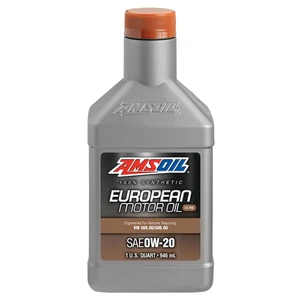
AMSOIL 0W-20 LS-VW 100% Synthetic European Motor Oil
Product Code : EZTQT-EA
SEE PRODUCT PRICE
VIEW DETAILS0W-30 and 0W-40: distinguish the second number
A 0W-30 and a 0W-40 share a winter classification but differ in their operating-temperature grade. Compare only the grades the engine manufacturer allows. This group also crosses product families, so a European oil and a Max-Duty diesel oil must each be checked against the required application information. The word synthetic does not erase the differences between them.
When planning for cold weather, consider where the vehicle starts and the manufacturer's ambient-temperature guidance. A winter grade is not an outdoor thermometer reading or an absolute starting guarantee. Batteries, starting systems and fuel suitability also affect whether an engine starts reliably. Keep those systems on their own maintenance checklists. If starting becomes difficult, diagnose the cause instead of assuming every cold-weather issue should be addressed by a different oil grade.
0W-40
Possible application — verify requirements
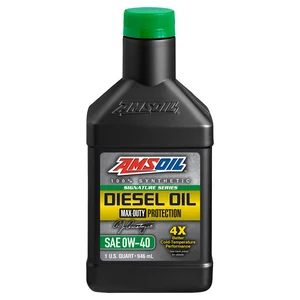
AMSOIL Signature Series 0W-40 100% Synthetic Max-Duty Diesel Oil
Product Code : DZFQT-EA
SEE PRODUCT PRICE
VIEW DETAILSPossible application — verify requirements
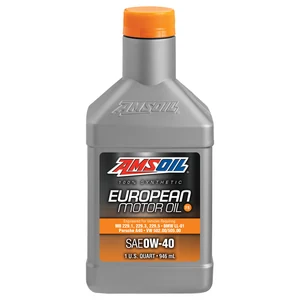
AMSOIL 0W-40 FS 100% Synthetic European Motor Oil
Product Code : EFOQT-EA
SEE PRODUCT PRICE
VIEW DETAILS0W-30
Possible application — verify requirements
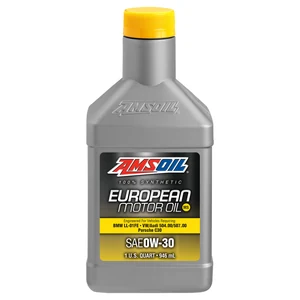
AMSOIL 0W-30 MS 100% Synthetic European Motor Oil
Product Code : EOTQT-EA
SEE PRODUCT PRICE
VIEW DETAILS5W-30: several families, several specification paths
The 5W-30 shelf can contain Max-Duty diesel oil, smaller-diesel oil and European formulations. This is a good example of why viscosity shopping needs a second check. Compare the exact product name and specification, not only the numbers. AMSOIL separates its smaller American diesel range from applications requiring CK-4 or prior heavy-duty categories. A similar front-label grade does not make those products substitutes.
If more than one 5W-30 appears relevant, write the required standard beside each candidate and eliminate products that do not document the intended application. Then review the service instructions and package options. For a household or shop storing several oils, label the full product name on the service worksheet. That helps prevent an otherwise careful selection from being lost when somebody later reaches for whichever 5W-30 container is closest.
5W-30
Possible application — verify requirements
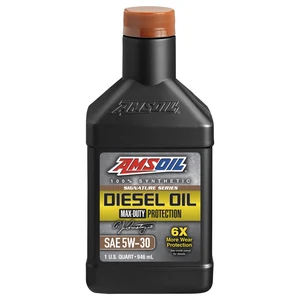
AMSOIL Signature Series 5W-30 100% Synthetic Max-Duty Diesel Oil
Product Code : DHDQT-EA
SEE PRODUCT PRICE
VIEW DETAILSPossible application — verify requirements
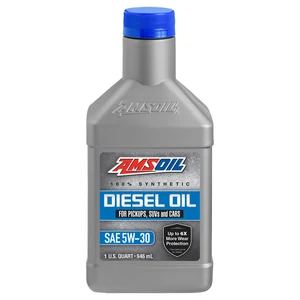
AMSOIL 5W-30 100% Synthetic Diesel Oil
Product Code : DP530QT-EA
SEE PRODUCT PRICE
VIEW DETAILSPossible application — verify requirements
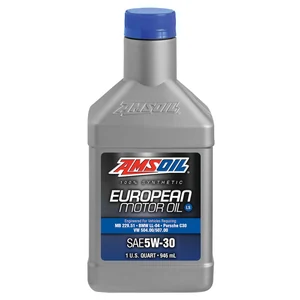
AMSOIL 5W-30 LS 100% Synthetic European Motor Oil
Product Code : AELQT-EA
SEE PRODUCT PRICE
VIEW DETAILS5W-40: compare application families before containers
The 5W-40 group brings together heavy-duty diesel and European application products. It offers convenient browsing, but those categories have different requirements. Manufacturer standards, additive formulation and emissions compatibility remain relevant even when the SAE grade matches. Use the dedicated family pages when you want more context about Max-Duty, Heavy-Duty or European options rather than relying on bottle appearance to distinguish them.
A 5W-40 is not simply a 15W-40 with a different label, and the grade does not describe a blend of two separate oils. Multigrade oils satisfy requirements at both low and operating temperatures. Read the current technical data if you need to compare measured viscosity properties. Use those properties in the context of an actual requirement; a single technical number does not rank every product from best to worst for every engine.
5W-40
Possible application — verify requirements
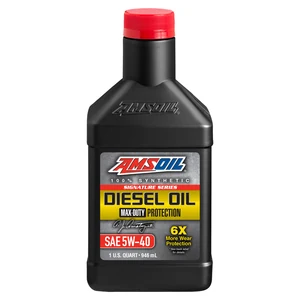
AMSOIL Signature Series 5W-40 100% Synthetic Max-Duty Diesel Oil
Product Code : DEOQT-EA
SEE PRODUCT PRICE
VIEW DETAILSPossible application — verify requirements
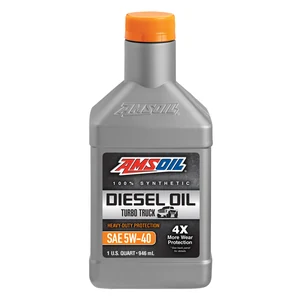
AMSOIL 5W-40 Heavy-Duty 100% Synthetic Diesel Oil
Product Code : ADOQT-EA
SEE PRODUCT PRICE
VIEW DETAILSPossible application — verify requirements
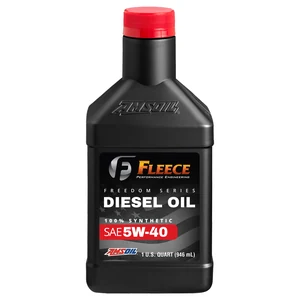
Freedom Series 5W-40 100% Synthetic Diesel Oil
Product Code : FD540QT-EA
See current product information and available reviews on AMSOIL.com.
SEE PRODUCT PRICE
VIEW DETAILSPossible application — verify requirements
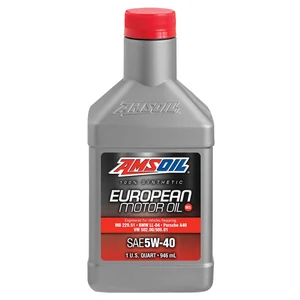
AMSOIL 5W-40 MS 100% Synthetic European Motor Oil
Product Code : AFLQT-EA
SEE PRODUCT PRICE
VIEW DETAILSPossible application — verify requirements
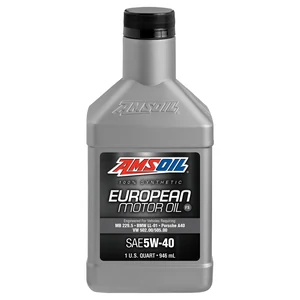
AMSOIL 5W-40 FS 100% Synthetic European Motor Oil
Product Code : EFMQT-EA
SEE PRODUCT PRICE
VIEW DETAILS10W-30, 10W-40 and 15W-40: compare like with like
These familiar work-engine grades appear across several diesel oil families. Start with the manual's permitted viscosity and then compare products on the same specification basis. The Commercial-Grade blend, Heavy-Duty full synthetic and Signature Series Max-Duty are separate options. The Diesel and Marine 15W-40 product also has distinct older-application guidance. Choose the required application first instead of treating all bottles in one viscosity group as identical.
API performance categories deserve their own check. In particular, FA-4 is not interchangeable with CK-4 and earlier categories. A 10W-30 label by itself therefore cannot settle suitability. Keep the complete performance requirement in the service record along with viscosity. When evaluating a product change across a fleet, repeat that check for each engine family rather than deciding that one shared grade will automatically simplify every service.
15W-40
Possible application — verify requirements
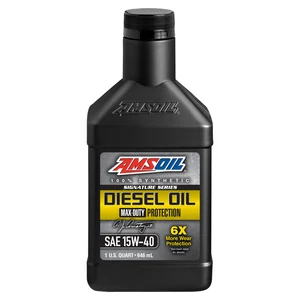
AMSOIL Signature Series 15W-40 100% Synthetic Max-Duty Diesel Oil
Product Code : DMEQT-EA
SEE PRODUCT PRICE
VIEW DETAILSPossible application — verify requirements
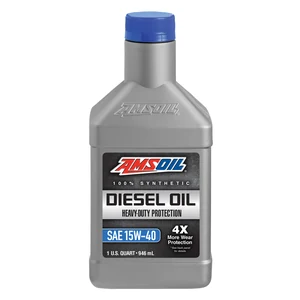
AMSOIL 15W-40 Heavy-Duty 100% Synthetic Diesel Oil
Product Code : ADPQT-EA
SEE PRODUCT PRICE
VIEW DETAILSPossible application — verify requirements
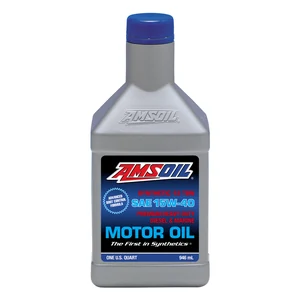
AMSOIL 15W-40 Heavy-Duty Diesel and Marine Oil
Product Code : AMEQT-EA
SEE PRODUCT PRICE
VIEW DETAILSPossible application — verify requirements
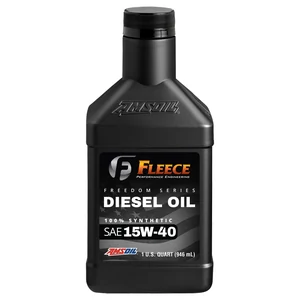
Freedom Series 15W-40 100% Synthetic Diesel Oil
Product Code : FD1540QT-EA
See current product information and available reviews on AMSOIL.com.
SEE PRODUCT PRICE
VIEW DETAILSPossible application — verify requirements
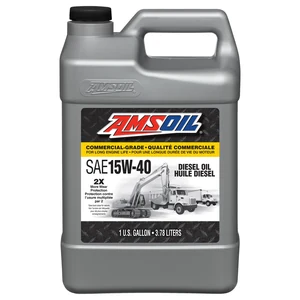
AMSOIL 15W-40 Commercial Grade Diesel Oil
Product Code : SBDF1G-EA
SEE PRODUCT PRICE
VIEW DETAILS10W-30
Possible application — verify requirements
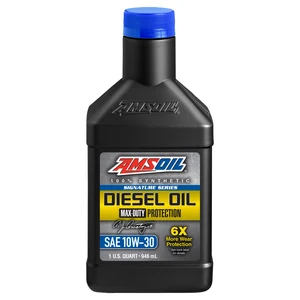
AMSOIL Signature Series 10W-30 100% Synthetic Max-Duty Diesel Oil
Product Code : DTTQT-EA
SEE PRODUCT PRICE
VIEW DETAILSPossible application — verify requirements
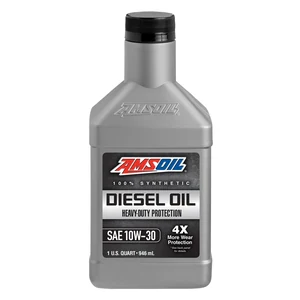
AMSOIL 10W-30 Heavy-Duty 100% Synthetic Diesel Oil
Product Code : ADNQT-EA
SEE PRODUCT PRICE
VIEW DETAILSPossible application — verify requirements
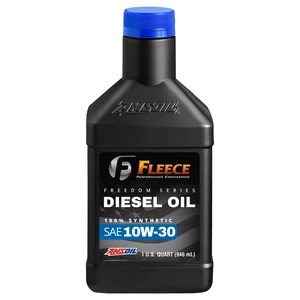
Freedom Series 10W-30 100% Synthetic Diesel Oil
Product Code : FD1030QT-EA
See current product information and available reviews on AMSOIL.com.
SEE PRODUCT PRICE
VIEW DETAILSPossible application — verify requirements
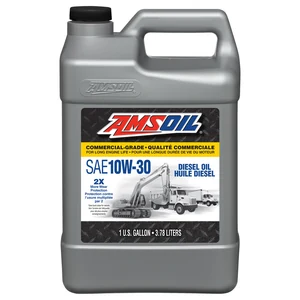
AMSOIL 10W-30 Commercial-Grade Diesel Oil
Product Code : SBDT1G-EA
SEE PRODUCT PRICE
VIEW DETAILS10W-40
Possible application — verify requirements
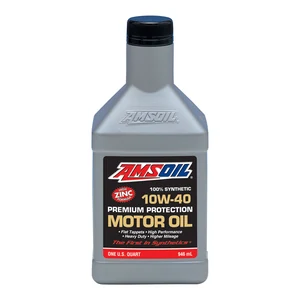
AMSOIL Premium Protection 10W-40 100% Synthetic Motor Oil
Product Code : AMOQT-EA
SEE PRODUCT PRICE
VIEW DETAILS20W-50: distinguish competition and older-application oils
The 20W-50 Competition Diesel Oil card belongs in a separate specialized group. Follow the competition engine builder's direction and the product's intended application. Its presence in a viscosity directory does not make it an upgrade for a normal road-going diesel. A heavier operating-temperature grade is not automatically better protection for an engine designed around a different lubricant.
Finish any viscosity search with the same four checks: engine identity, permitted grade, required specification and applicable interval. Record the full product name when the decision is made. Use the local product page to compare packages and the current official bulletin to resolve technical details. If you do not yet know the required grade, use the vehicle guides or the official application lookup before narrowing the catalog. A filter helps you browse efficiently; the engine documentation is what makes the final choice meaningful.
The Premium Protection 20W-50 card is included for its documented older-application diesel uses, separately from DOMINATOR Competition Diesel Oil. The same distinction applies to Premium Protection 10W-40 in the previous group. Neither product should be treated as a general-purpose oil for a modern diesel particulate filter application. Check the actual engine requirement and the complete bulletin before selecting either older-application or competition products.
20W-50
Possible application — verify requirements
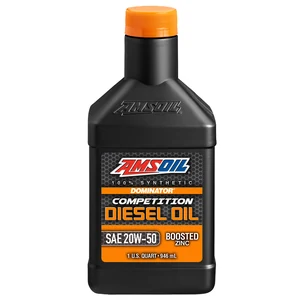
AMSOIL DOMINATOR 20W-50 Competition Diesel Oil
Product Code : DCOQT-EA
SEE PRODUCT PRICE
VIEW DETAILSPossible application — verify requirements
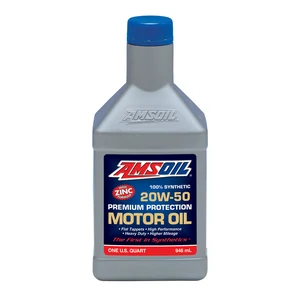
AMSOIL Premium Protection 20W-50 100% Synthetic Motor Oil
Product Code : AROQT-EA
SEE PRODUCT PRICE
VIEW DETAILSKeep exploring diesel products
Choose products first. Then compare account options.
Explore AMSOIL Preferred Customer membership for personal purchases or the Commercial Account guide for qualifying business use. Compare all account types before deciding.
Technical sources & application information
Educational guidance prepared for Diesel Oil Works. Original source list compiled October 23, 2026; the separately labeled comparison check covers the newer product-family comparison. Product-card rating check dates appear on each card. Confirm current applications and instructions in the official sources.